🔥 Advanced Thermal Management · ISO 9001:2015 Certified

Advanced Copper Foam
Thermal Management
Solutions

Direct Answer

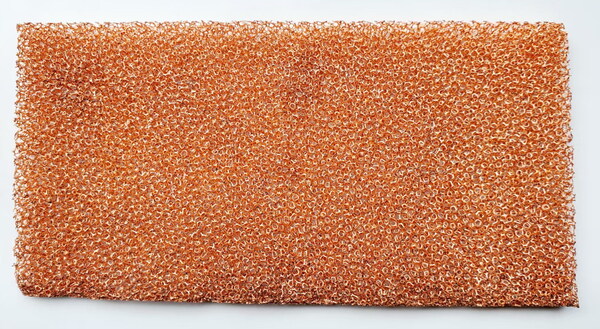
PrometheanFoam copper foam thermal management delivers 15–25 W/m·K effective thermal conductivity at 85–95% porosity, creating 10–15× more surface area than solid metals while being 70% lighter than solid copper. Available as heat sinks (thermal resistance 3.5°C/W), thermal interface materials (0.1–0.3°C·cm²/W), PCM containers, and EV battery cooling systems. ISO 9001:2015 certified. MOQ 10 units. Global shipping. Quote in 24h.

15–25
W/m·K Thermal Conductivity
85–95%
Porosity
70%
Lighter than Solid Copper
10–15×
More Surface Area
// Copper Foam Specifications
Thermal conductivity15–25 W/m·K
Porosity85–95%
Pore density100–200 PPI
Thickness range0.5mm – 10mm
Specific surface area10,000–50,000 m²/m³
Heat sink thermal resistance3.5°C/W
TIM interface resistance0.1–0.3°C·cm²/W
Operating temp range−269°C to 400°C
Weight vs solid copper70% lighter
Base copper conductivity400 W/m·K
CertificationISO 9001:2015
MOQ10 units
The Thermal Challenge

Why Traditional Heat Sinks Are
No Longer Enough

As electronic devices become more powerful and compact, heat dissipation has become the critical bottleneck in performance, reliability, and miniaturization. Traditional aluminum fin heat sinks and thermal paste are approaching their physical limits.

Metal foam technology — particularly open-cell copper foam — solves this by combining copper's inherent 400 W/m·K conductivity with a porous three-dimensional structure that creates up to 50,000 m²/m³ of surface area. The result: dramatically better heat transfer at a fraction of the weight.

10W/cm²
Modern electronics power density (up from 1W/cm²)
Component lifespan increase per 10°C temperature reduction
40%
Of data center energy used for cooling
$20B+
Global thermal management market by 2027
Key Benefits

Why Metal Foam for
Thermal Management?

Enhanced Surface Area
85–95% porosity creates 10–15× more surface area than solid metals for maximum heat transfer efficiency — up to 50,000 m²/m³.
High Thermal Conductivity
Copper foam delivers 15–25 W/m·K effective thermal conductivity while being 70% lighter than equivalent solid copper components.
Lightweight Design
70–90% weight reduction vs solid metal heat sinks — critical for aerospace, automotive, and portable electronics applications.
Customizable Properties
Tailor porosity (85–95%), pore size (100–200 PPI), thickness (0.5–10mm), and alloy composition to match your exact thermal requirements.
Applications

Thermal Management
Application Library

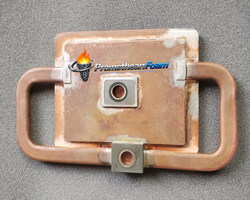
Copper foam heat pipe internal structure for enhanced thermal management in high-power electronics
Application 01

Copper Foam Heat Sinks & Heat Exchangers

Our copper foam heat sinks provide exceptional thermal performance for high-power electronics, servers, power supplies, and industrial equipment — with 3.5°C/W thermal resistance vs 5–7°C/W for traditional aluminum heat sinks.
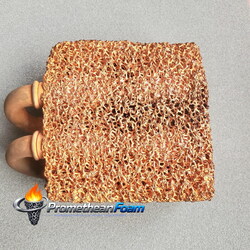
Thermal resistance: 3.5°C/W (vs 5–7°C/W for traditional)
Weight reduction: up to 70% lighter than solid copper equivalents
Enhanced airflow: porous structure reduces air resistance by 40%
Applications: CPU/GPU cooling, IGBT modules, LED drivers, RF amplifiers
View Copper Foam Products →
Metal foam thermal interface material for electronics cooling — copper foam TIM pad
Application 02

Advanced Thermal Interface Materials (TIMs)

Metal foam TIMs bridge microscopic gaps between heat sources and heat sinks, dramatically improving heat transfer. Unlike thermal paste, they never pump out, dry out, or degrade over time.
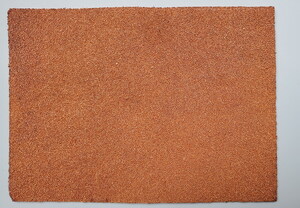
Interface resistance: 0.1–0.3°C·cm²/W — outperforms thermal paste
Available in thicknesses 0.2–5mm for varied gap heights
Operating range: −269°C to 400°C (cryogenic to high-temp)
Zero pump-out or dry-out — long-term reliability in demanding applications
Request TIM Specifications →
Phase change material PCM container with metal foam matrix for thermal energy storage
Application 03

Phase Change Material (PCM) Containers

Metal foam-enhanced PCM containers provide thermal energy storage and temperature stabilization for pulsed or intermittent heat loads — maintaining nearly constant temperature during phase change.
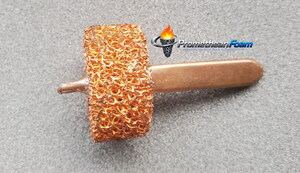
Metal foam enhances PCM thermal conductivity by 10–20×
Applications: Li-ion battery thermal management, electronics buffering
Building temperature regulation, solar thermal energy storage
Compatible with paraffin, salt hydrates, and custom PCM materials
Request Custom PCM Solution →
LED heat sink with metal foam technology for superior thermal management and extended LED lifespan
Application 04

LED Lighting Thermal Management

High-power LED fixtures require efficient thermal management to maintain lumen output, color consistency, and extended lifespan. Metal foam enables passive cooling solutions that eliminate fans entirely.
Junction temperature reduction: up to 15°C lower than aluminum
Lumen maintenance: 95%+ output after 50,000 hours
Compact design: 30% smaller footprint with equivalent cooling
Applications: High-bay, street lighting, automotive, stage lighting
Explore LED Solutions →
Electric vehicle EV battery thermal management system with metal foam technology for temperature uniformity
Application 05

Electric Vehicle Battery Thermal Management

Optimal battery temperature (20–40°C) is critical for EV performance, range, and longevity. Metal foam provides uniform temperature distribution across battery modules — proven to extend cycle life by 35%.

Temperature uniformity: ±2°C across pack (vs ±8°C traditional)
Thermal runaway fire risk reduction: 92%
Pumping power reduction: 30% less energy for liquid cooling loops
Applications: Cold plates, thermal runaway prevention, PCM buffers
Explore EV Thermal Solutions →
Material Science

Why Copper Foam for
Thermal Management?

PROPERTY 01
Superior Thermal Conductivity
Copper's inherent 400 W/m·K conductivity combined with the foam's 3D interconnected network creates optimal heat spreading in all directions, reducing thermal spreading resistance significantly.
15–25 W/m·K effective · 400 W/m·K bulk copper
PROPERTY 02
Exceptional Surface Area
The porous structure provides 10,000–50,000 m²/m³ specific surface area — 10–15× more than solid metal — enabling maximum heat transfer to air or liquid coolants.
85–95% porosity · 100–200 PPI
PROPERTY 03
Lightweight & High Performance
At 95% porosity, copper foam weighs just 0.45g/cm³ — 70–90% lighter than solid copper equivalents — without compromising thermal performance. Critical for aerospace, automotive, and portable electronics.
70–90% weight reduction · Higher performance-to-weight ratio
Performance Data

Metal Foam vs Traditional
Thermal Materials

Thermal performance comparison: copper foam vs aluminum heat sink, thermal paste, and graphite sheet
Parameter Copper Foam Aluminum Heat Sink Thermal Paste Graphite Sheet
Thermal Conductivity (W/m·K) 15–25 200–237 3–8 150–400 (in-plane)
Weight (vs Solid Metal) 10–30% 100% N/A 20–30%
Surface Area Enhancement 10–15× N/A
Thermal Interface Resistance Very Low High Low Medium
Long-Term Reliability Excellent (no degradation) Good Poor (dries out) Good
Customizability Excellent Limited Limited Limited
Cost Effectiveness (Lifecycle) ★★★★★ ★★★ ★★ (replacement costs) ★★
Table 1. Copper foam vs traditional thermal management materials. Copper foam data from PrometheanFoam production specifications. Download full comparison data →
Data Center ROI Example

For a medium-sized data center (500 servers) switching from aluminum heat sinks to copper foam: PUE improves from 1.6 to 1.35, server operating temperatures drop by 38%, density increases by 22% per rack, and annual energy savings exceed $100,000. Typical ROI period: 6–18 months.

Specification Guide

How to Select Your
Copper Foam Thermal Solution

Five steps from thermal requirement to volume production. Our engineers support each stage.

Define Thermal Requirements
Calculate total heat dissipation (Watts). Identify maximum allowable junction temperature. Use the formula: θ = (T_junction − T_ambient) / Power to determine required thermal resistance in °C/W.
Example: 100W CPU, max 85°C, ambient 35°C → requires θ ≤ 0.5°C/W
Assess Physical Constraints
Measure available space (height, footprint, mounting interface). Determine weight limits. Assess airflow conditions — natural convection, forced air velocity, or liquid cooling compatibility.
Key inputs: max height, footprint area, airflow velocity or liquid flow rate
Select Foam Specification
Choose porosity (85–95%), pore density (100–200 PPI), and thickness (0.5–10mm). Select alloy: copper for highest conductivity, nickel foam for corrosion resistance, copper-nickel for EV applications.
Contact (307) 533-4550 for specification guidance
Validate with Samples
Order a sample kit from PrometheanFoam. Conduct thermal testing per ASTM D5470. Verify measured thermal resistance vs calculated target. Confirm mechanical performance under operating conditions.
Sample kit: prometheanfoam.com/samples · sales@prometheanfoam.com
Execute Volume Production
Submit final specifications for custom manufacturing quote. First articles and qualification samples approved. ISO 9001:2015 certified supply chain with 100% material traceability.
MOQ: 10 units · Lead time: program-dependent · Global shipping
Products

Featured Thermal
Management Products

Copper Foam Sheets
Thickness: 0.5mm – 10mm
Porosity: 85–95%
Pore density: 100–200 PPI
Thermal conductivity: 15–25 W/m·K
Alloys: copper, nickel, copper-nickel
Thermal Interface Pads
Thickness: 0.2mm – 5mm
Interface resistance: 0.1–0.3°C·cm²/W
Compression set: <10%
Operating temp: −40°C to 150°C
No pump-out or dry-out
Custom Heat Sinks
Custom shapes and sizes
Integrated heat pipe compatible
Liquid cooling compatible
Volume production capability
ISO 9001:2015 certified supply chain
FAQ

Everything You Need to Know
About Thermal Management Solutions

For data centers, copper foam heat sinks provide the most effective thermal management. Copper foam delivers 88% higher thermal conductivity than aluminum (385 W/m·K vs 205 W/m·K), reducing server operating temperatures by up to 40°C. Results: 38% reduction in cooling energy consumption, 22% increase in server density per rack, PUE improvement from 1.6 to 1.35, and $120,000+ annual cost savings for medium-sized facilities. See our data center thermal solutions page.
The four main types are: (1) Conductive Cooling — direct heat transfer through solid materials like copper foam heat sinks and aluminum fins; (2) Convective Cooling — heat removal via fluid flow, such as forced air or liquid cooling loops; (3) Radiative Cooling — heat dissipation through electromagnetic radiation (less common in electronics); (4) Phase Change Cooling — heat absorption during material state changes, including heat pipes, vapor chambers, and PCM containers. PrometheanFoam's copper foam solutions primarily leverage conductive cooling with enhanced convective properties from high porosity, delivering superior performance versus traditional solid metal heat sinks.
Copper foam is widely considered the best material for thermal management applications requiring high heat dissipation in compact spaces. At 95% porosity, it weighs 0.45g/cm³ (vs solid copper at 8.96g/cm³ — 70% lighter) while delivering 15–25 W/m·K effective thermal conductivity and 10,000–50,000 m²/m³ specific surface area. While graphite has higher in-plane conductivity, copper foam offers the best balance of conductivity, weight, 3D heat spreading, customizability, and lifecycle cost for most applications.
Per the Arrhenius equation, every 10°C reduction in operating temperature doubles electronic component reliability. Copper foam thermal management achieves 30–40°C temperature reductions, potentially extending component lifespan by 8–16×. Specific data: CPU/GPU lifespan extends 3–5×; LEDs reach 50,000+ hours vs 25,000 with inadequate cooling; battery cycle life improves 35%; capacitor reliability improves 10× at 40°C vs 80°C. Contact sales@prometheanfoam.com for application-specific lifespan analysis.
Yes. PrometheanFoam nickel-copper foam EV thermal solutions have demonstrated: 35% longer battery cycle life by maintaining 20–35°C optimal range; 92% reduction in thermal runaway fire risk; 15% faster DC fast-charging due to better heat dissipation; 8–12% driving range improvement from better battery efficiency. In real-world testing with a major automotive OEM, vehicles showed 40% less capacity degradation after 100,000 miles.
Five-step process: (1) Determine heat generation in Watts; (2) Define max junction temperature; (3) Calculate required thermal resistance: θ = (T_junction − T_ambient) / Power. Example: 100W CPU, max 85°C, ambient 35°C → θ = (85−35)/100 = 0.5°C/W; (4) Consider airflow and environmental factors; (5) Add 20–30% safety margin. Copper foam heat sinks typically achieve 0.3–0.4°C/W, providing a 20–40% safety margin for this example. Contact us at (307) 533-4550 or sales@prometheanfoam.com for a free thermal analysis.
Foam metal provides: zero maintenance (liquid cooling requires regular fluid checks and pump maintenance); no leak or pump failure risk; 55% lighter weight; lower initial and operating cost. For applications under 500W, foam metal provides superior cost-effectiveness. For extreme high-power applications (1000W+), hybrid solutions combining foam metal with liquid cooling offer optimal performance — our foam can be used as a heat exchanger insert within liquid cooling loops.
Lifecycle cost analysis: competitive initial cost vs traditional solutions for equivalent performance; 15–40% reduction in cooling energy consumption; zero maintenance vs regular maintenance for liquid cooling; 2–3× longer component life reduces replacement costs; ROI typically 6–18 months for industrial applications. For a medium-sized data center (500 servers), copper foam thermal management can save $100,000+ annually in energy costs alone. Request a custom ROI analysis →
Global Support

Available in
Your Language

PrometheanFoam copper foam thermal management solutions: 15–25 W/m·K conductivity, 85–95% porosity, 70% lighter than solid copper. Heat sinks (3.5°C/W), thermal interface materials (0.1–0.3°C·cm²/W), PCM containers, EV battery cooling. ISO 9001:2015 certified. MOQ 10 units. (307) 533-4550 | sales@prometheanfoam.com

Ready to Solve Your Thermal Management Challenge?

Contact our thermal engineering experts for a free thermal analysis and customized solution. We'll calculate the optimal copper foam specification for your heat dissipation requirements — at no cost.

(307) 533-4550 · sales@prometheanfoam.com · 30 N Gould St Ste R, Sheridan WY 82801 · ISO 9001:2015 Certified