For decades, commercial kitchens have struggled with a fundamental challenge: finding filtration materials that effectively capture grease and airborne particulates while withstanding the extreme heat of cooking environments. Traditional materials either performed well but failed under heat, or survived high temperatures but offered poor filtration.
At PrometheanFoam, we've developed a revolutionary solution: stainless steel foam metal. This breakthrough material combines the exceptional adsorption properties of sponge materials with the extreme temperature resistance of industrial-grade stainless steel. In this article, we'll explore the science behind this technology and explain how it achieves 93%+ filtration efficiency.
The Sponge Conundrum: Excellent Adsorption, Poor Heat Resistance
Sponge materials have long been recognized for their exceptional adsorption capabilities. Their porous structure creates a massive surface area relative to their volume, allowing them to capture and retain oils, greases, and other contaminants effectively. In laboratory settings, sponge materials can demonstrate adsorption rates that make them ideal candidates for filtration applications.
However, this advantage comes with a significant limitation: most sponge materials cannot withstand high temperatures. In commercial kitchen environments, where exhaust systems regularly encounter temperatures of 200-300°C (392-572°F) and can experience flash fires reaching much higher temperatures, traditional sponge materials would degrade, melt, or even become fire hazards.
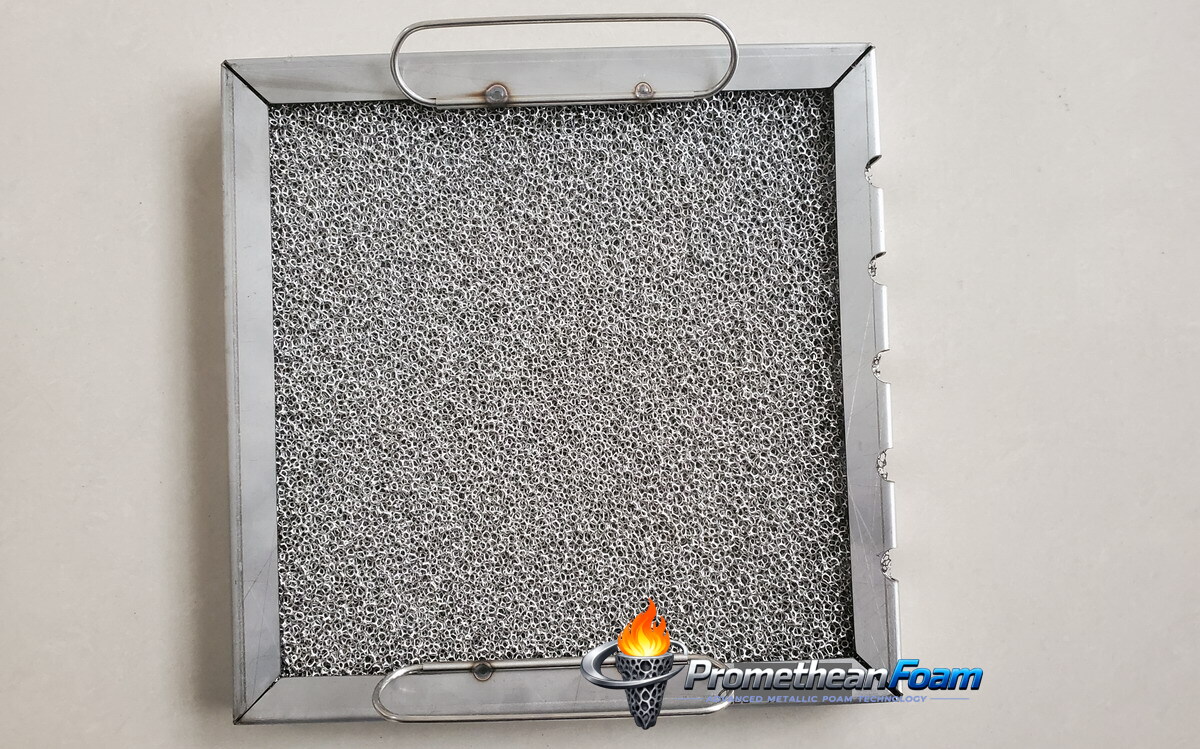
Figure 1: The porous structure of traditional sponge materials (left) compared to stainless steel foam metal (right)
The PrometheanFoam Solution: Stainless Steel Foam Metal
Our engineers approached this challenge by asking: "What if we could create a material with the adsorption properties of a sponge but made from high-temperature-resistant stainless steel?" The result was our proprietary foam metal technology.
Stainless steel foam metal is created through a specialized manufacturing process that produces a three-dimensional porous structure. Unlike solid metal sheets or traditional mesh filters, foam metal features interconnected pores that create an extensive internal surface area while maintaining structural integrity.
Sponge vs. Stainless Steel Foam Metal: A Direct Comparison
| Characteristic | Traditional Sponge Materials | Stainless Steel Foam Metal |
|---|---|---|
| Adsorption Efficiency | Excellent (85-95%) | Excellent (93%+) |
| Maximum Temperature | 100-150°C (212-302°F) | 1400°C (2552°F) - Melting Point |
| Fire Safety | Combustible | A1 Non-combustible Rating |
| Lifespan | 3-6 months | 10+ years |
| Maintenance | Frequent replacement | Cleanable and reusable |
The Science Behind 93%+ Filtration Efficiency
To understand how stainless steel foam metal achieves such high filtration efficiency, we need to examine three key scientific principles:
1. Extended Surface Area Through Porosity
Our foam metal is engineered with 18-20 PPI (pores per inch), creating a structure that is 92-95% porous. This means that while the material appears solid at a distance, it's actually mostly open space with a complex network of interconnected metal struts. This design creates a surface area that is 8-10 times greater than an equivalent solid metal sheet.
92-95% Porosity
18-20 PPI
8-10x Surface Area
2. Impingement and Interception Mechanisms
As contaminated air flows through the foam metal structure, grease particles encounter several filtration mechanisms:
- Direct Impingement: Larger particles collide directly with metal struts and are captured
- Interception: Particles follow air streamlines but are intercepted when they come close enough to metal surfaces
- Inertial Separation: Heavier particles cannot follow rapid changes in airflow direction and impact metal surfaces
- Brownian Motion: Very small particles (sub-micron) move erratically and eventually impact metal surfaces
3. Surface Energy and Wettability
The stainless steel surface has a specific surface energy that promotes the adhesion of oils and greases. Unlike some materials that repel oils, our specially treated foam metal surface encourages oil droplets to spread and adhere, preventing re-entrainment into the airflow.
The 1400°C Advantage: Why Temperature Resistance Matters
Stainless steel's melting point of approximately 1400°C (2552°F) provides several critical advantages in commercial kitchen applications:
Key High-Temperature Benefits
- Flash Fire Safety: During a kitchen flash fire, foam metal filters won't ignite or contribute to fire spread
- Structural Integrity: The material maintains its shape and filtration properties even after exposure to extreme heat
- No Degradation: Unlike polymer-based filters that can melt or release toxic fumes, stainless steel remains inert
- Thermal Cycling Resistance: Can withstand repeated heating and cooling cycles without fatigue
- Compatibility with High-Temp Cleaning: Can be cleaned using high-temperature methods including commercial dishwashers
This temperature resistance is particularly important for commercial kitchens that experience frequent high-heat cooking, such as wok stations, broilers, and charbroilers. In these environments, exhaust systems can regularly reach temperatures that would damage or destroy traditional filtration materials.
Real-World Applications and Performance Data
Our foam metal technology has been tested and validated in numerous commercial kitchen environments. Here's what the data shows:
Commercial Restaurants
93.2% average grease capture efficiency in high-volume restaurants with mixed cooking methods.
Institutional Kitchens
94.1% efficiency in school and hospital kitchens with continuous cooking operations.
Industrial Food Processing
92.8% efficiency in food manufacturing facilities with heavy grease loads.
These performance figures are consistently higher than traditional baffle filters (70-80% efficiency) and aluminum mesh filters (75-85% efficiency). The improvement isn't just incremental—it represents a significant advancement in kitchen exhaust filtration technology.
Beyond the Kitchen: Other Industrial Applications
While this article focuses on commercial kitchen applications, the principles of foam metal filtration apply to numerous industrial sectors:
- Industrial Fume Extraction: Capturing oil mists and particulates in manufacturing environments
- Compressed Air Filtration: Removing oil aerosols from compressed air systems
- Process Gas Filtration: Cleaning process gases in chemical and pharmaceutical manufacturing
- Marine Exhaust Systems: Filtration in ship galley exhaust systems
Experience Foam Metal Technology Firsthand
Ready to see how 93%+ filtration efficiency can transform your kitchen exhaust system?